
Granville County Divorce Records
Granville County divorce records are managed by the Clerk of Superior Court in Oxford. Granville County sits in the northern Piedmont region of North Carolina and falls under Judicial District 9. The clerk office handles all civil case filings, including divorce. You can search Granville County divorce records in person at the courthouse or through the state eCourts portal online. Court staff in Oxford can help you locate case files and provide copies of divorce documents for Granville County.
Granville County Quick Facts
Granville County Clerk of Superior Court
The Clerk of Superior Court in Granville County is the official record keeper for all divorce cases. The office stores court files, issues certified copies, and processes new filings. Granville County was formed in 1746 from Edgecombe County. It was named for John Lord Carteret, Earl Granville.
The courthouse at 101 Main Street in Oxford handles all Granville County divorce filings. Visit the NC Courts page for Granville County to access court calendars and the eCourts search portal. The Granville County contact directory lists phone numbers for all court departments. Public access terminals at the courthouse let you search divorce records in Granville County on your own.
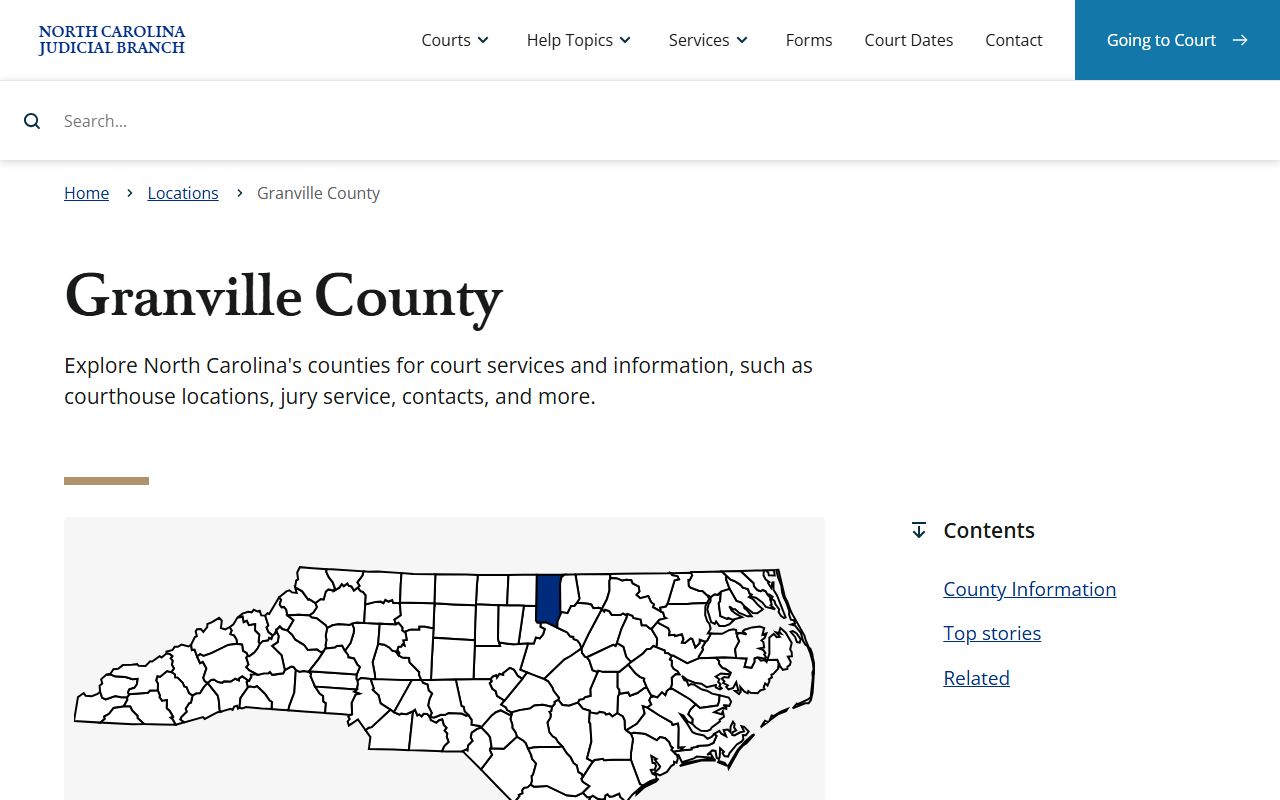
The image above shows the Granville County court listing on the NC Courts website. You can find schedules, local rules, and links to search divorce cases in Granville County.
| Court |
Granville County Clerk of Superior Court 101 Main Street Oxford, NC 27565 Phone: (919) 693-2500 |
|---|---|
| Hours | Monday through Friday, 8:30 AM to 5:00 PM |
| Website | nccourts.gov/locations/granville-county |
Searching for Divorce Records in Granville County
There are two ways to look for divorce records in Granville County. You can use the North Carolina eCourts portal online. It covers civil cases in all counties, including Granville County. Search by party name or case number. Basic case information is free to view.
For in-person searches, visit the courthouse at 101 Main Street in Oxford. Bring a valid photo ID. Staff at the Granville County clerk office can search by name or case number. Have the full name of at least one spouse ready. The year the divorce was filed helps. A case number makes the search faster. Older Granville County divorce records may need extra time because they could be stored in a different part of the building.
You can also submit a written public records request to the Granville County Clerk of Superior Court. Include as much detail as possible about the case you are looking for. The Granville County government website has general county information and contact details.
The Granville County government website shown above provides links to county offices and resources for residents.
Note: Call ahead to confirm what you need to bring when visiting the Granville County courthouse for divorce record requests.
Granville County Divorce Filing Steps
Filing for divorce in Granville County follows North Carolina law. You start by filing a complaint for absolute divorce at the clerk office. The filing fee is $225. The clerk gives you a case number at that time.
Under N.C.G.S. 50-8, at least one spouse must have been a North Carolina resident for six months before filing. Under N.C.G.S. 50-6, you must have been living separate and apart for at least one year. You file in the county where either spouse lives. If you live in Granville County, you file at the Oxford courthouse. After filing, you serve the other spouse using the sheriff, a process server, or certified mail. The judge signs the final judgment once all conditions are met. That order becomes part of the public record in Granville County.
Note: Property and alimony claims must be filed before the final divorce judgment in Granville County, or they are waived.
What Granville County Divorce Records Contain
A Granville County divorce case file holds many documents. The complaint states the grounds for divorce. The answer is the other party's response. A separation agreement may outline terms the spouses agreed on for property, support, and custody.
The final judgment of divorce is the key document. This order ends the marriage. Most people who request Granville County divorce records need a certified copy of this judgment. It is used for name changes, property sales, and remarriage. The Granville County clerk can provide certified copies for a fee. Other documents in the file may include motions, temporary orders, and service records. All of these are part of the court file in Granville County.
Divorce records in Granville County are public under the North Carolina Public Records Act, N.C.G.S. Chapter 132. Anyone can request to view them at the courthouse.
Granville County Divorce Verification
The North Carolina Vital Records office issues verification letters for divorces in Granville County from 1958 to the present. A verification letter confirms the divorce took place. It includes names, date, and the county where it was granted.
Request a letter by mail from NC Vital Records at 1903 Mail Service Center, Raleigh, NC 27699-1903. The fee is $24 for one copy. Extra copies at the same time cost $15 each. For Granville County divorces before 1958, contact the Clerk of Superior Court in Oxford. The clerk keeps those older case files.
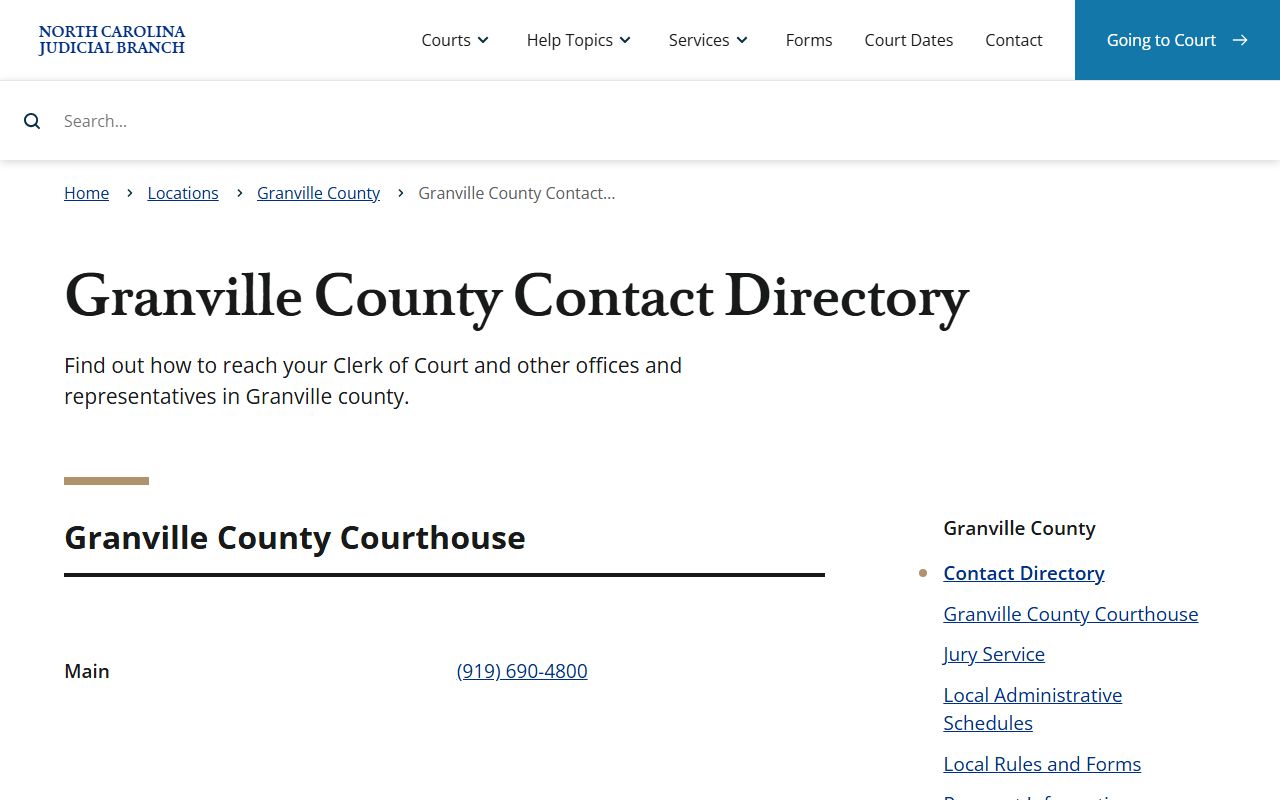
The contact directory shown above lists all Granville County court departments and their phone numbers for handling divorce record requests.
Legal Help for Granville County Divorce
Legal Aid of North Carolina provides free legal help to low income residents in Granville County. Call their helpline at (866) 219-5262. The North Carolina State Bar lawyer referral service at 1-800-662-7660 can connect you with a family law attorney near Granville County.
The NC Courts divorce page has all the forms and instructions you need to file on your own in Granville County. Court staff at the Oxford courthouse can help you find the right forms but cannot give legal advice.
Nearby Counties
These counties are near Granville County. Make sure you file in the county where you live. The court must have jurisdiction over your divorce case.