
Search North Carolina Divorce Records
North Carolina divorce records are public documents stored by the Clerk of Superior Court in each of the state's 100 counties. The North Carolina Division of Public Health also keeps divorce certificates dating back to 1958. Whether you need a copy of a final judgment or a divorce verification letter, these records are open to the public. You can search North Carolina divorce records online through the eCourts portal, request them by mail, or visit a courthouse in person to get copies of case files and court orders.
North Carolina Divorce Records Quick Facts
Where to Find North Carolina Divorce Records
Two main sources hold divorce records in North Carolina. The Clerk of Superior Court in each county keeps the full case files. These files include the complaint, the answer, any separation agreements, and the final divorce judgment signed by the judge. County clerks have maintained these court records since 1835, when the General Assembly gave superior courts the power to dissolve marriages. Before that year, only the legislature could grant a divorce in North Carolina.
The North Carolina Division of Public Health, Vital Records Section is the second source. This office holds divorce certificates from 1958 to the present. A divorce certificate shows the names of both spouses, who filed the case, the dates of marriage and separation, and the county where the divorce was granted. It does not include the full terms of any settlement. For case details beyond what the certificate shows, you need to contact the Clerk of Court in the county where the divorce was filed.
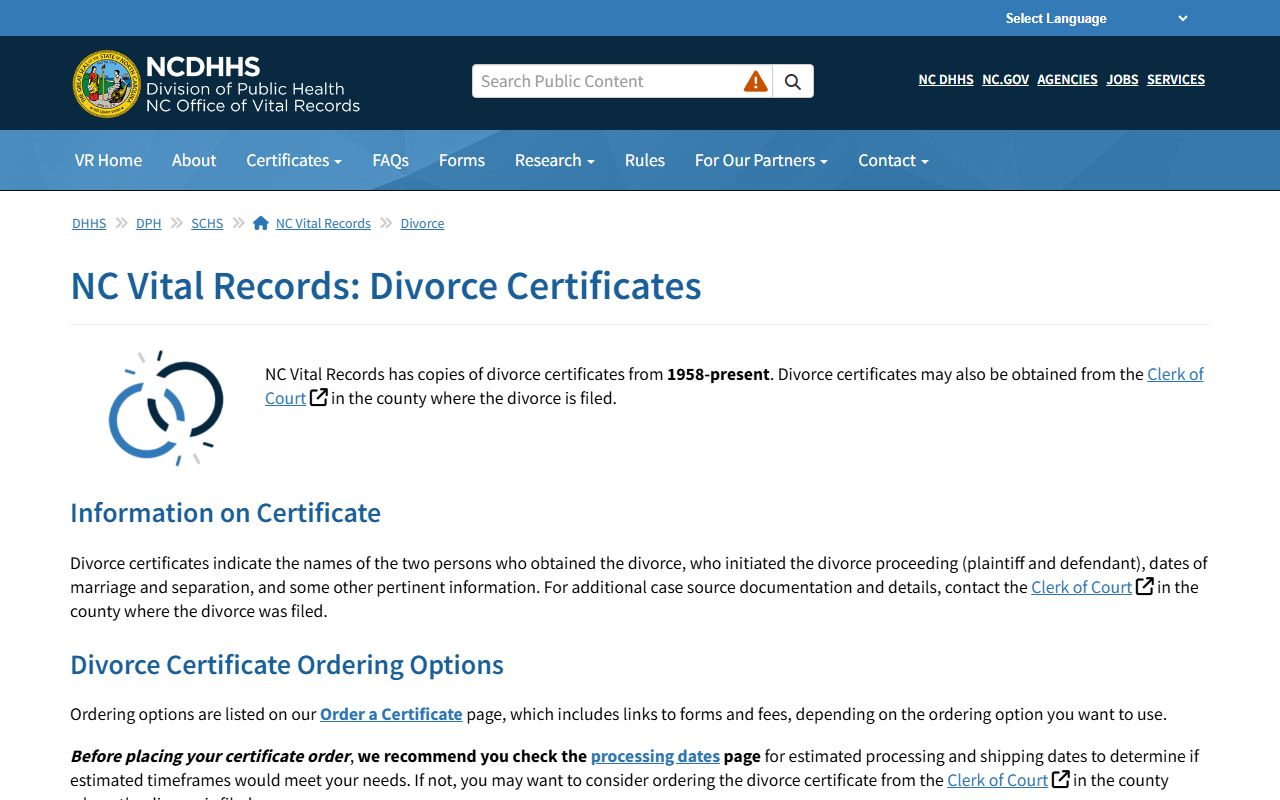
The Vital Records office does not process divorce filings. All required documents must go through the Clerk of Court in the county where you or your spouse lives in North Carolina.
Searching Divorce Cases Online
The North Carolina Judicial Branch eCourts portal gives free access to civil court records across all 100 counties. You can look up divorce cases by party name or case number. The system shows basic case data such as party names, filing dates, and case status. Full document copies require a visit to the clerk office or a formal records request.
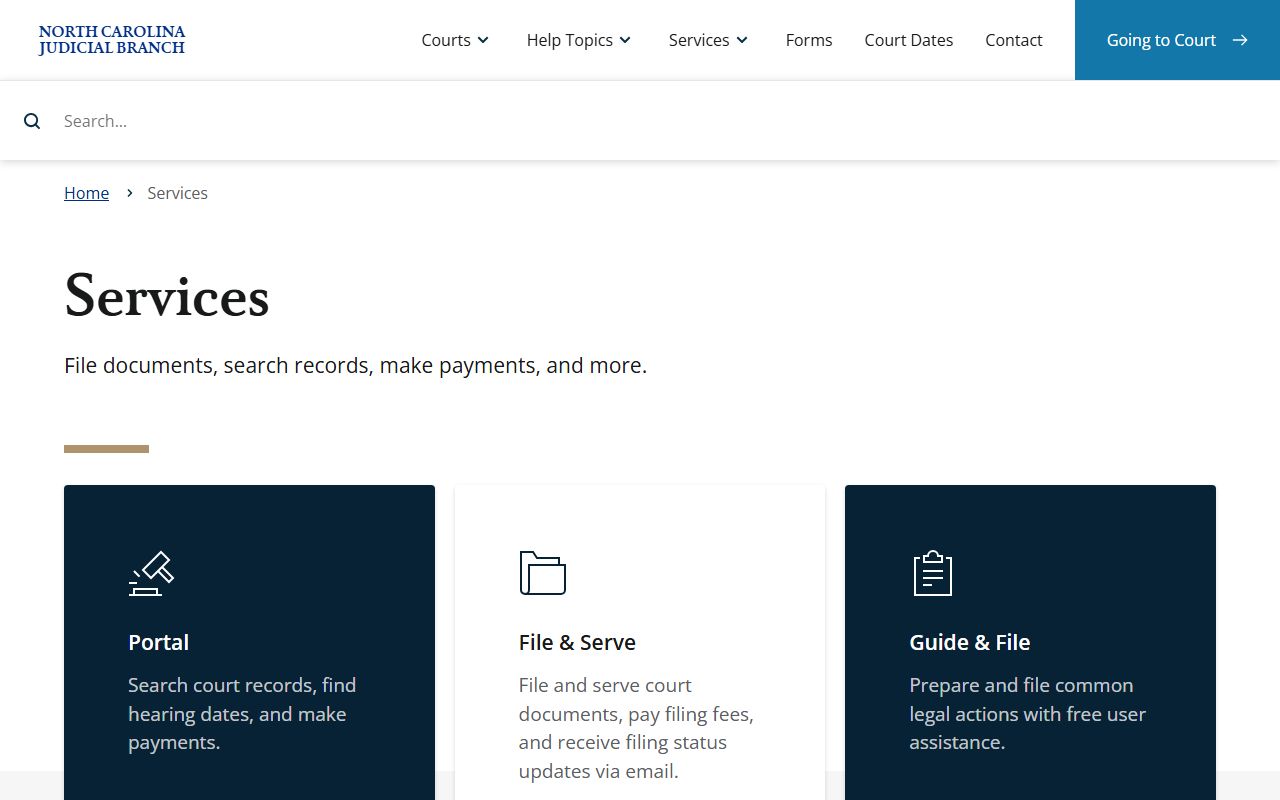
The eCourts system is being rolled out county by county across North Carolina. Some counties are fully live while others still use older systems. You can search from home at any time. To find a divorce case, you need the full name of at least one spouse and the approximate year of the filing. Having the case number speeds up the search. Basic case information is free, but complete case files still require an in-person visit to the courthouse in North Carolina.
The Administrative Office of the Courts oversees this statewide system. They set records policies for all 100 counties and manage the court automation program. If you have questions about online access to divorce records, call the AOC at 919-890-1000.
Guide and File is another tool on the portal. It helps people prepare and file common legal actions with free step-by-step assistance in North Carolina.
Types of North Carolina Divorce Records
Several types of documents make up a divorce record in North Carolina. The complaint for absolute divorce starts the case. It states the grounds and what the person filing seeks from the court. The answer is the other spouse's response. A separation agreement, if one exists, spells out what both parties agreed to on property, children, and support. These agreements must be in writing, signed by both spouses, and notarized under North Carolina law.
The judgment of absolute divorce is the court order that ends the marriage. A judge signs this document after the case is resolved. It is the most important record in the file. Most people who need proof of divorce in North Carolina will want a certified copy of this judgment. The North Carolina Judicial Branch provides forms and guides for people going through the divorce process.
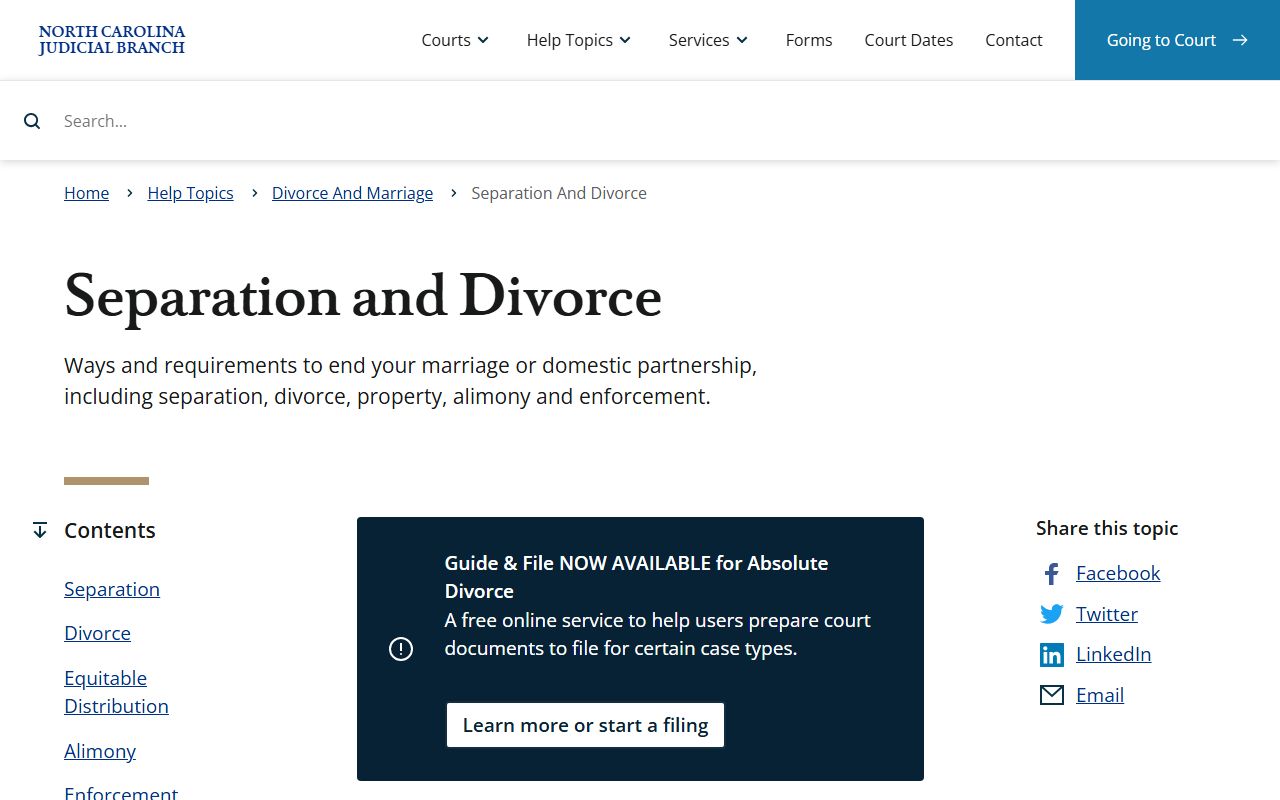
The Certificate of Absolute Divorce is a separate form. The Clerk of Court completes this standardized form when a divorce is granted. It gets filed with NC Vital Records for state records. This certificate is distinct from the full decree. It serves as the official record in state vital statistics for North Carolina.
Note: Court case files may also hold motions, affidavits, and other papers that show the full history of a divorce proceeding in North Carolina.
Separation and Filing Rules
North Carolina only allows no-fault divorce. Under N.C.G.S. 50-6, spouses must live separate and apart for at least one year before either can file. During that time, at least one spouse must intend the separation to be permanent. You do not need a written separation agreement to be legally separated. You just need to live in different homes with the intent that it is permanent.
A separation agreement is a private contract. It is optional but common. Typical terms cover property division, spousal support, child custody, and child support. Both signatures must be notarized. Living in the same home does not count as separation, even if the relationship has ended. North Carolina does not allow fault-based absolute divorce, and isolated incidents of sexual contact during the separation period do not reset the one-year clock under the statute.
Under N.C.G.S. 50-8, at least one spouse must have lived in North Carolina for six months before filing. The complaint must state the date of separation and confirm the parties have lived apart since that date. After filing, the other spouse must be served with the papers. Service can happen through the county sheriff, certified mail, or a private process server in North Carolina.
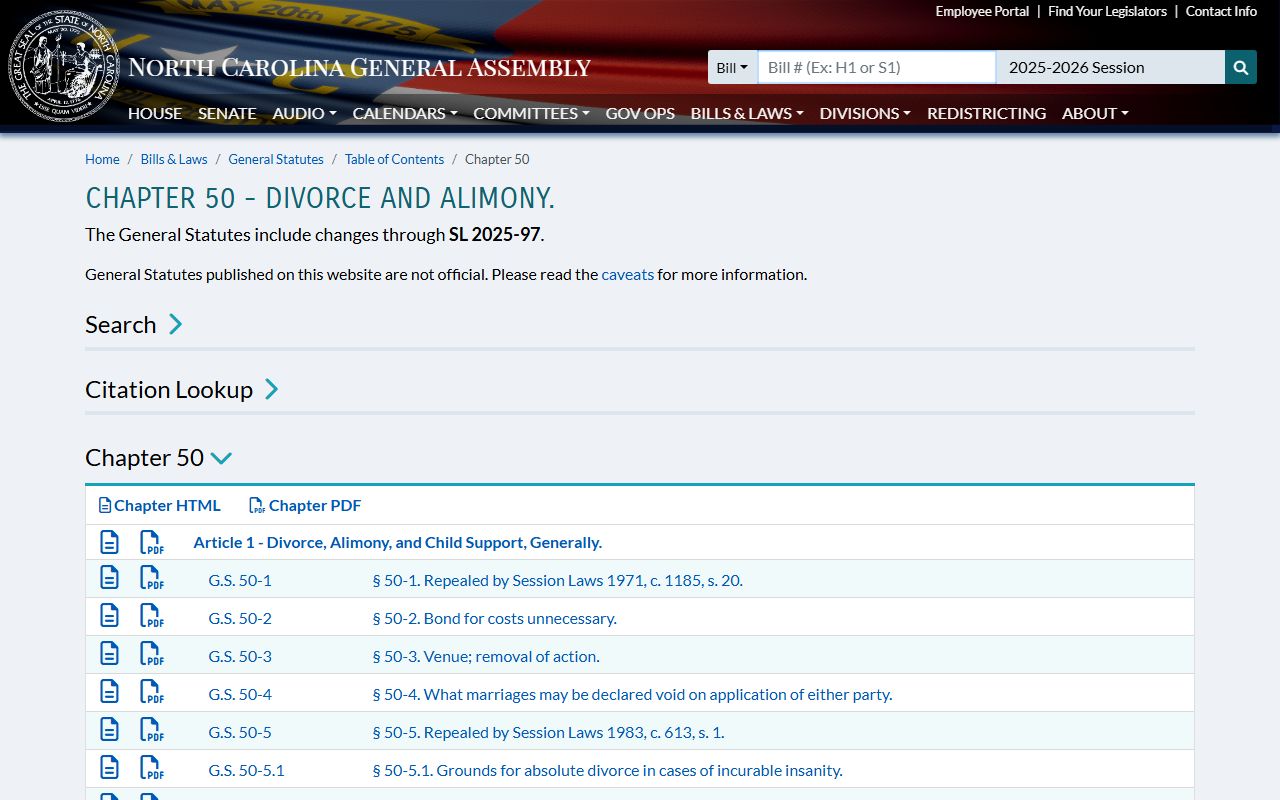
Critical deadlines apply to divorce cases. If nobody files for equitable distribution before the final judgment, both spouses lose the right to ask a court to divide property. The same rule applies to alimony claims. A final divorce judgment permanently cuts off these rights in North Carolina. A Divorce from Bed and Board is not the same as an absolute divorce. It is a court-ordered separation available only when one spouse can prove serious fault such as adultery or substance abuse.
North Carolina Divorce Record Fees
Fees depend on what you need and where you get it. Filing a new divorce complaint costs $225 at the district court. Copy fees at the clerk office vary by county but most charge $0.25 per page for plain copies. Certified copies cost more. Service fees apply when you have the other spouse served with papers in North Carolina.
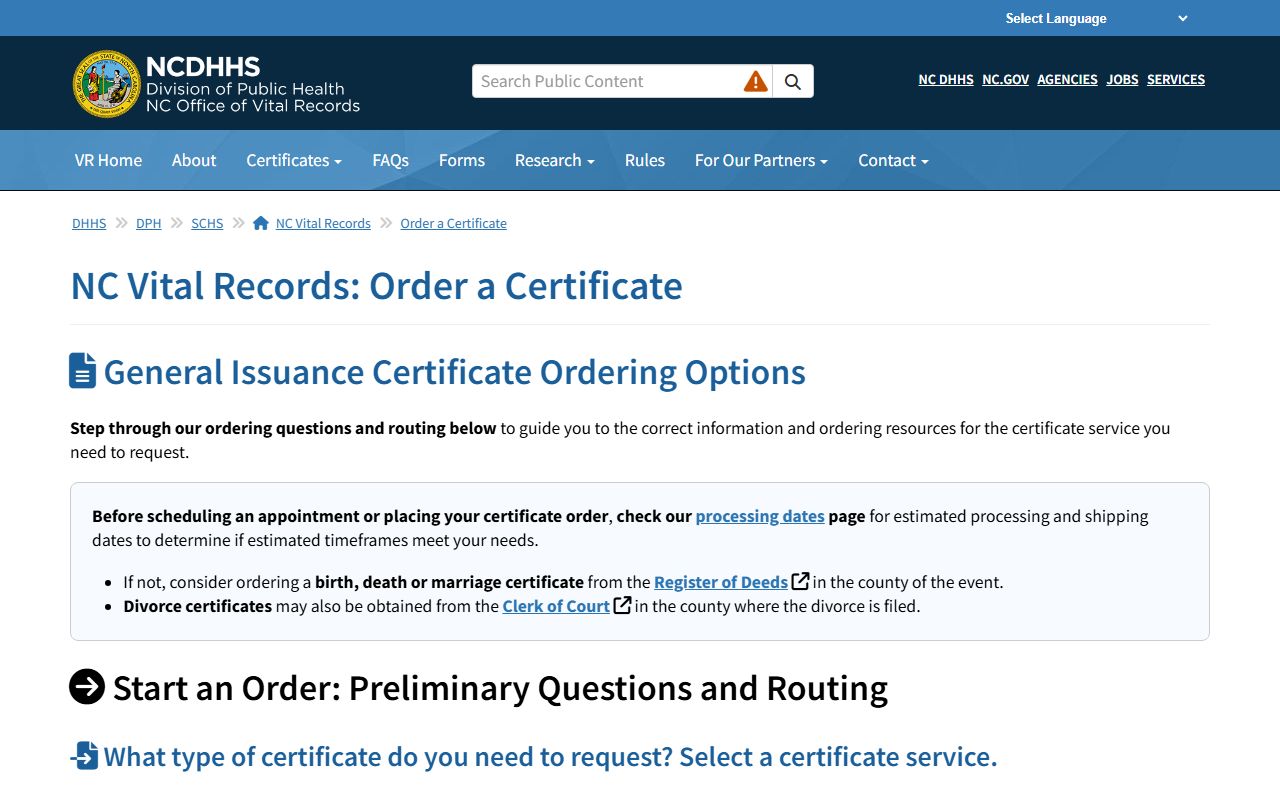
The NC Vital Records office charges $24 for a standard divorce certificate search per three-year period. That fee includes one copy if a record is found. Additional copies ordered at the same time cost $15 each. The fee is not refunded if no record is found. You can pay by check, money order, or credit card. Credit card orders have a processing fee. Orders can be placed online, by mail, or in person at 225 North McDowell Street in Raleigh.
Fee waivers exist for people who cannot afford court costs. Complete a Petition to Proceed as an Indigent form and show proof of financial hardship. The court decides if you qualify for a waiver in North Carolina.
Note: Filing fees and copy costs can change, so confirm current rates with the court or Vital Records before submitting payment.
Historical Divorce Records in North Carolina
The North Carolina State Archives holds historical county records of statewide value. This includes court records, estate records, marriage records, and divorce records from before the mid-1960s court reform. After the American Revolution through 1827, divorces were granted by the General Assembly. Those records are in the legislative papers at the State Archives in Raleigh.
From 1827 forward, superior courts handled divorce cases in each county. Locating old divorce records can be difficult. The case may have been filed in a different county than expected. Try searching all places where both spouses lived. Historical newspapers also printed divorce notices and separation announcements. Many couples in earlier periods simply separated without filing any legal papers, so no divorce record exists for them in North Carolina.
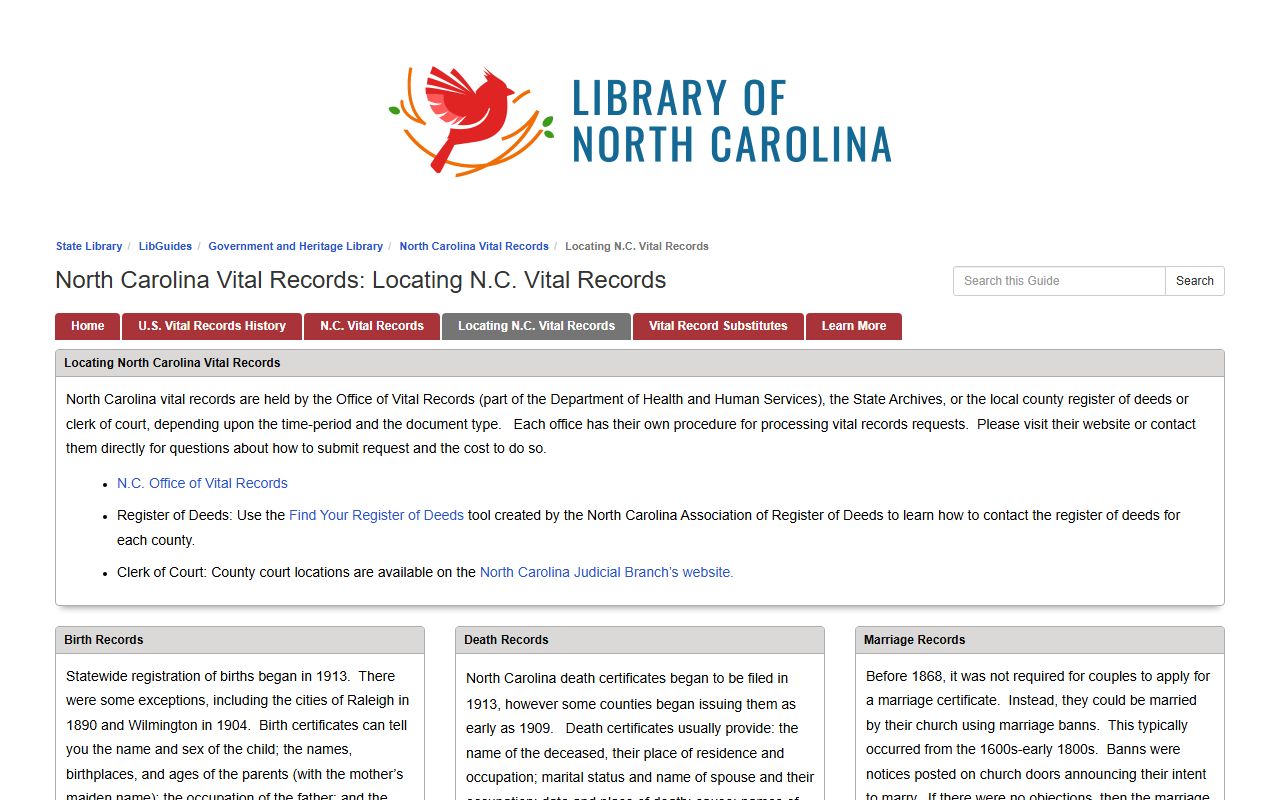
The North Carolina State Library provides research guides for locating vital records. Their genealogy section has family histories, local records, and step-by-step guides for finding divorce documents. Pre-1958 divorce records must come from the county Clerk of Court where the divorce was granted, not from NC Vital Records.
For pre-court reform records from the mid-1960s and earlier, contact Flannery Fitch at the State Archives at 919-814-7066. For post-court reform records, call the Administrative Office of Courts at 919-890-1000. The Western Regional Archives at 176 Riceville Rd in Asheville serves western North Carolina counties. The Outer Banks History Center in Manteo may have regional records for coastal counties.
Getting Copies of North Carolina Divorce Records
For divorce certificates from 1958 to present, mail your request to the NC Vital Records Section at 1903 Mail Service Center, Raleigh, NC 27699-1903. Include the names of both spouses, the date and place of divorce, and your payment. You can also visit the office in person at 225 North McDowell Street in Raleigh. Walk-in service is available during business hours. Check the processing dates page for current wait times before ordering.
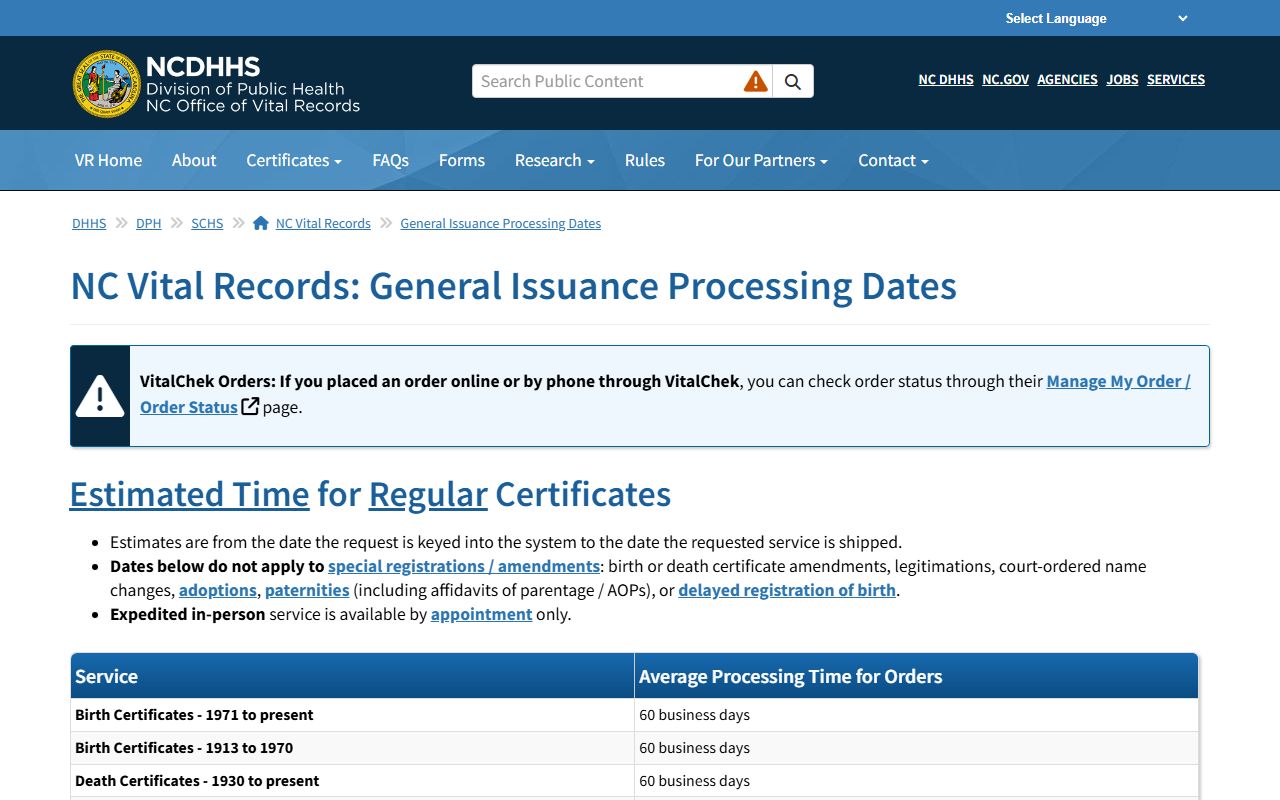
For complete divorce judgments and case files, go to the Clerk of Superior Court in the county where the case was filed. You can request copies in person or by mail. Bring the names of both parties or the case number. The clerk can search records and make copies for a fee. Certified copies carry the court seal and are accepted for legal purposes such as name changes or remarriage in North Carolina.
Under N.C.G.S. Chapter 132, divorce records held by courts are public. You do not need to be a party to the case. Anyone can request copies. Some details like Social Security numbers and financial account numbers may be redacted from public copies. A party can ask the court to seal records, but sealed divorce cases are uncommon in North Carolina.
Legal Help for Divorce in North Carolina
Legal Aid of North Carolina offers free legal assistance to people with low income. They handle family law cases including divorce across the state. Their File-It-Yourself Divorce Packet gives step-by-step instructions for people filing without a lawyer. The packet covers required forms, filing steps, and what to expect at the hearing. Call the helpline at 866-219-5262 for more information.
If you meet the eligibility requirements, you can file on your own. You need the Complaint for Absolute Divorce, a Civil Summons, a Domestic Civil Action Cover Sheet, and a Servicemembers Civil Relief Act affidavit. On day 31 after service, you can take the Judgment for Absolute Divorce and the Certificate of Absolute Divorce to the clerk for the judge to sign in North Carolina.
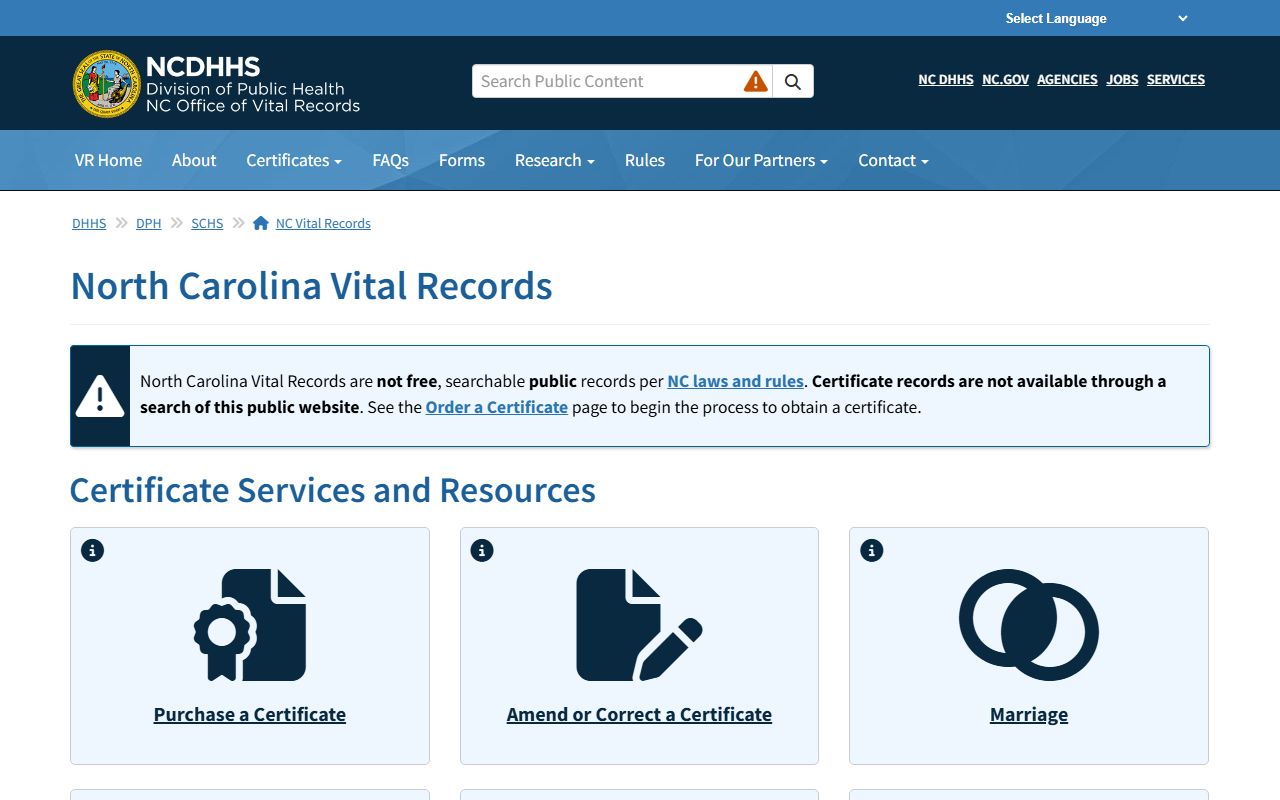
The State Archives research guide can help people looking for older divorce records. Historical case files often contain marriage details, residences, names of children, and the grounds for the divorce. These records are useful for both legal and genealogical research in North Carolina.
Browse North Carolina Divorce Records by County
Each county in North Carolina has its own Clerk of Superior Court that keeps divorce records. Pick a county below to find local contact info and resources for divorce records in that area.
Divorce Records in Major North Carolina Cities
Residents of major cities file for divorce at their county courthouse. Pick a city below to learn about divorce records in that area.